Hail damage is easy to miss from the driveway and easy to exaggerate from a sales pitch. NOAA logged hail somewhere in Tulsa County on 258 days from 1996 to 2025, about 8.6 a year. Here is what it does to a roof and what to do after a storm.
Updated October 28, 2026 · Sources listed at the end
The National Weather Service treats hail 1 inch in diameter (quarter size) or larger as severe, and uses higher damage tags for hail of 1.75 inches (golf ball) and 2.75 inches (baseball). In Tulsa County, hail of 1 inch or larger fell on 143 days from 1996 to 2025, and every one of those years had at least one such day. 59% of all hail days came in April, May and June.
AprJunAugOct
200020052010201520202026*
Every month from March to October since 1996. A filled square means NOAA logged hail somewhere in Tulsa County that month; the color is the largest stone. *2026 runs through July 2026.noneunder 1 in1 to 1.5 in1.75 to 2.5 in2.75 in +NOAA NCEI Storm Events Database.
The largest stone in the county record since 1996 was 4.25 inches, near Tulsa International Airport on March 25, 2015. All the hail data.
What hail does to shingles
Bruises. A soft spot where the mat under the granules has been fractured. It may look like nothing for a year and then start to lose granules.
Granule loss. Dark spots where the stone knocked the surface off. Some granules in the gutter after any storm are normal; a lot after hail is a sign.
Cracks and punctures. From large stones, especially on older, brittle shingles.
Collateral damage. Dents in gutters, downspouts, vents, window screens and the AC unit's fins. Adjusters look at these to judge the size of the hail at your house.
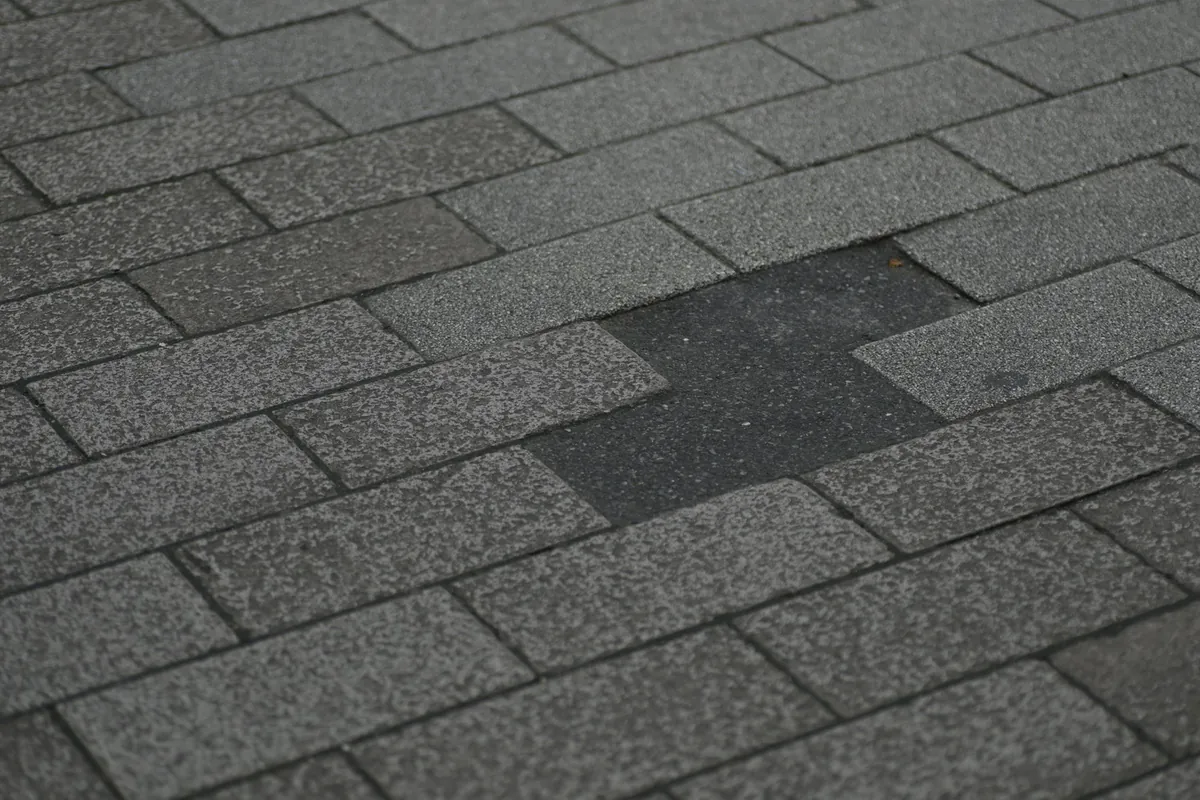
Bare spots where the granules are gone. The asphalt underneath ages faster in the sun. Photo: blue soda / Unsplash
Wind damage
Damaging thunderstorm wind was reported on about 9 days a year in the county. Wind lifts the edges of shingles and breaks the seal strips, creases tabs, and peels shingles off ridges and rakes. A shingle that lifted and settled back down can look fine and still let water in.
After the storm
Stay off the roof. Photograph the hail on the ground next to a coin if it is still there, and note the date and time.
The Oklahoma Insurance Department advises taking photos or video of the damage, making temporary repairs, saving all receipts, and not making permanent repairs until your insurer has inspected.
Check your policy's wind and hail deductible. The Oklahoma Insurance Department says a wind and hail deductible is usually set at 1% of the dwelling amount but can be 2% to 5%.
Have a registered roofer look before you decide whether to file. If the damage is below or slightly above your deductible, the Oklahoma Insurance Department says you may want to pay for the repairs rather than file a claim.
Watch the sales pitch
The FTC warns that home repair scammers may knock on your door or call after a windstorm or other disaster and pressure you to act quickly. Under 59 O.S. 1151.30, a roofer working on an insurance-paid job may not advertise or promise to pay all or part of your insurance deductible, and if one does, your insurer does not have to consider that roofer's estimate. Storm chasers and door knockers.
Questions Tulsa homeowners ask
How do I know if hail damaged my roof?
Look for dents in gutters, downspouts, vents and the AC unit, and for lots of granules in the gutters. Those suggest hail big enough to damage shingles. A roofer or adjuster confirms it on the roof itself. Do not climb up yourself.
How long do I have to file a hail claim?
It depends on your policy. Many set a deadline for reporting storm damage, and replacement cost policies often set one for finishing the work. The Oklahoma Insurance Department says replacement cost policies require the work to be completed within six months of the date of loss. Check your own policy for its deadline.
Will filing a hail claim raise my rates?
It can, depending on your insurer and your claim history. Ask your agent before you file if you are unsure, especially when the damage is close to your deductible.